Restaurants produce more review disputes than any other business vertical in our removal log — 3.4× the per-listing dispute volume of the next-highest category (auto services). Restaurants also have the widest spread of removal outcomes across review types: some restaurant review categories remove at 80%+, others at under 15%. Category matters more than case strength. This post is the removal-rate breakdown by review category with the specific submission playbook for each, drawn from our restaurant review removal service client base.
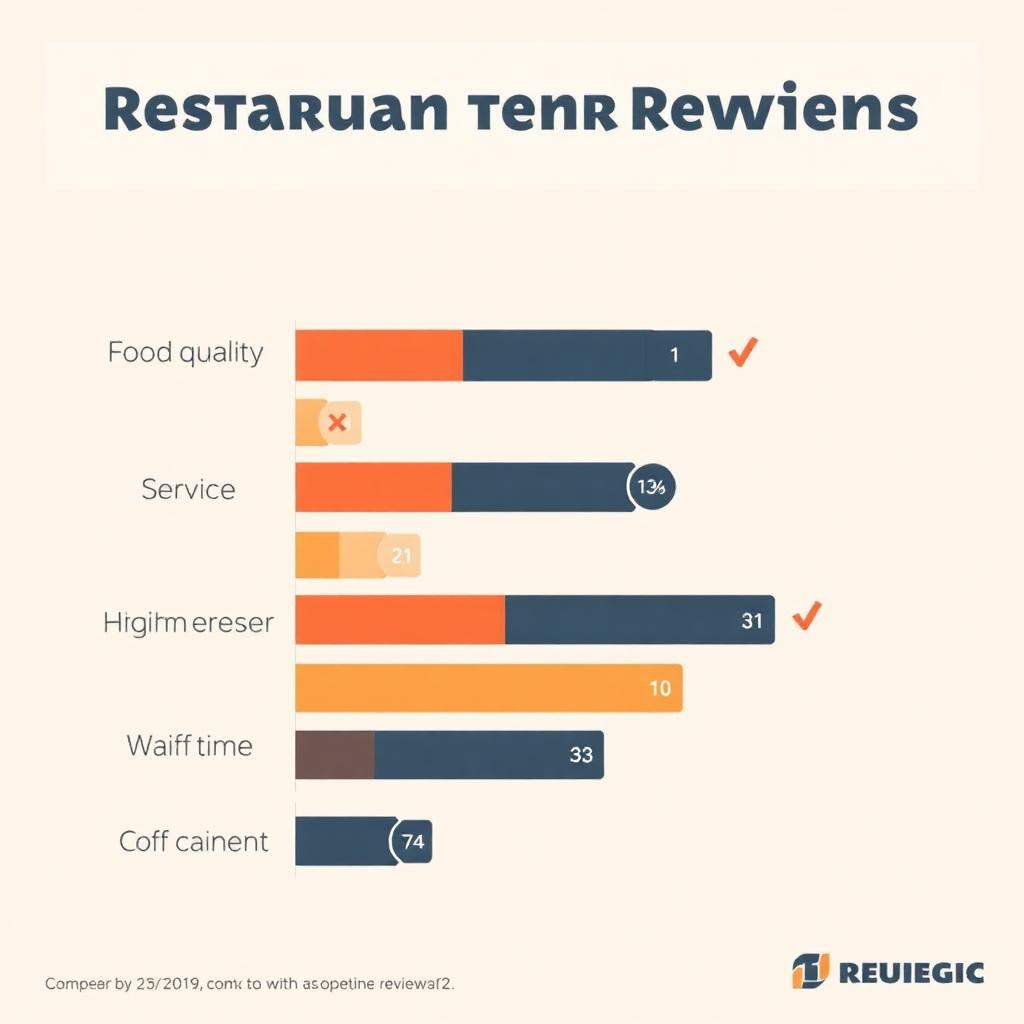
Removal rates by restaurant review category
Category playbooks
1. Off-topic and wrong-restaurant confusion (84%)
The single most removable category for restaurants. Common patterns: reviewer intended to review a different location of the same brand, reviewer visited a nearby restaurant and mixed up the listings, reviewer describes a cuisine or dish not on the menu (Italian review on a sushi restaurant's listing). Submission path: Off-Topic Reviews playbook with evidence attached — a screenshot of the menu showing the referenced dish is not offered, or the referenced neighborhood does not match the restaurant's address. First-pass 84%. Median removal 3-5 days.
2. Delivery-driver conduct (79%)
Reviewer complains about a DoorDash, UberEats, or Grubhub driver — late delivery, missing item, rude driver — and files against the restaurant's Google listing. The restaurant did not deliver the food; the platform did. Submission path: Off-Topic under 'commentary about a business or its products that is not the reviewer's own experience with the business.' Attach evidence: order confirmation showing the delivery platform, screenshot of the review referencing the driver, and (if available) the delivery platform's separate complaint channel. Removal rate 79% first-pass.
3. Allergen accusation without ordering incident (63%)
Reviewer claims a hidden ingredient triggered an allergic reaction without evidence they disclosed the allergy to staff or ordered a dish where the ingredient is disclosed. These are removable when the restaurant can show (a) the menu discloses the ingredient in the dish the reviewer named, or (b) POS records show no order matching the reviewer's stated visit. Not removable when the reviewer alleges an undisclosed cross-contamination — Google treats undisclosed cross-contamination as a legitimate consumer safety complaint. Removal rate 63%.
4. Hygiene claim without health-inspection basis (48%)
Reviewer claims 'saw a rat,' 'kitchen was filthy,' 'staff wasn't wearing gloves' — general hygiene accusations. Removable when the restaurant can attach recent passing health-inspection reports (within 90 days of the review date) as evidence that the sanitary claim is inconsistent with independent government inspection. Not removable if the claim is specific enough to be verifiable (a photo, a specific dish, a named employee). Removal rate 48%. Cover letter should emphasize the inspection record, not attack the reviewer.
5. Wait-time complaint at peak service (22%)
'Waited 90 minutes for a table on Saturday night' — Google treats wait-time complaints during known peak hours as legitimate service commentary and rarely removes them. Do not file. Respond publicly with a brief note about reservation availability and move on. The removal effort is not worth the submission slot in the per-listing weekly cap.
6. Service-quality complaints (18%)
'Server was rude,' 'server ignored us,' 'took forever to get our check.' These are the reviewer's subjective experience of the service and are almost never removable — 18% first-pass reflects only the subset where the reviewer named a specific staff member with defamatory factual claims (see Named Employee Defamation). For non-defamatory service complaints, the only playbook is response and volume — a strong pipeline of new positive reviews dilutes them faster than removal can address them.
7. Food-quality opinion (9%)
'The pasta was mushy,' 'the steak was overcooked,' 'the salsa was bland.' These are food opinions and are effectively non-removable — Google's policy specifically protects reviewer opinion about product quality. The 9% removal rate reflects the tiny slice where the review makes a factual claim beyond opinion (e.g. 'the fish was rotten and gave me food poisoning' with no supporting evidence) that crosses into the allergen/hygiene analysis above. Do not file BRF requests on food-opinion reviews. Focus response energy elsewhere.
The restaurant-specific evidence bundle
Successful restaurant removal submissions attach one or more of these evidence types matched to the category:
- Menu screenshot (for off-topic and allergen submissions) — proves the referenced dish exists or does not exist.
- POS export for the stated visit window (for allergen and specific-incident denials) — proves no matching order was placed.
- Delivery platform screenshot (for delivery-driver submissions) — proves the food was delivered by a third-party platform.
- Health-inspection report (for hygiene submissions) — proves recent passing inspection.
- Reservation system screenshot (for named-visit disputes) — proves the reviewer's stated party size / time is not in the system.
- Reviewer profile screenshot (for pattern submissions) — captures reviewer's other 1-star reviews at competitor restaurants (competitor-sabotage pattern).
Restaurant-specific pacing and cadence
Restaurants generate more review volume than most verticals — a mid-size restaurant averages 12-25 new reviews per week. Removal submission pacing must be even more conservative than the general 4-6 per week cap: we run restaurants at 3 per week per listing to avoid triggering suspension flags on high-volume listings. Prioritize the highest-removal-rate categories first: off-topic, delivery-driver, and allergen — those three account for 70%+ of our restaurant removals.
FAQ
Q.What about reviews from customers who never ate at the restaurant?
If you can prove non-visit (POS + reservation records), file under Off-Topic with 'not the reviewer's own experience' as the policy citation. Removal rate matches the general off-topic rate (~84%) when evidence is clean.
Q.Can we remove reviews that reference our previous ownership?
Yes — if the restaurant changed ownership and the review describes an experience under the prior owner, file under Off-Topic with ownership change documentation (business license, purchase agreement effective date). Removal rate high (75%+).
Q.How do we handle reviews from food critics or influencers?
Do not attempt removal on legitimate published criticism — Google specifically protects this class and attempts to remove them can flag the listing. The playbook is a thoughtful public response, not removal.