Former-employee reviews are the second-most-common commercial removal case we handle, after wrong-company confusion. They look like ordinary 1-star complaints but they belong in Google's Conflict-of-Interest lane, not the generic Business Redressal Form queue. Routed correctly and paired with a documented employment timeline, they remove at 63% first-pass across the 1,180 cases we ran through our Google review removal service in the last 12 months. Routed as generic negative reviews, the same cases remove at 11%.
Why former-employee reviews sit in a different queue
Google's 2024 Conflict-of-Interest guidance treats any review left by a person with a current or former undisclosed relationship to the business as a policy violation, not a legitimate first-hand experience. Employment is the most common trigger, followed by former contractor and former vendor relationships. The November 2025 policy refresh tightened the evidence requirement (documented current or recent past relationship, not pattern-of-behavior inference), which is why the sub-pattern rates below matter more than the headline number.
Recency is the single biggest driver. A review from an employee terminated in the last 90 days removes at 78% because the causal link (termination → retaliatory review) is legible on the timeline. The same reviewer at the 3-year mark drops to 31% because Google reads the gap as evidence the review is now genuine sentiment, not retaliation.
The employment-timeline evidence chain
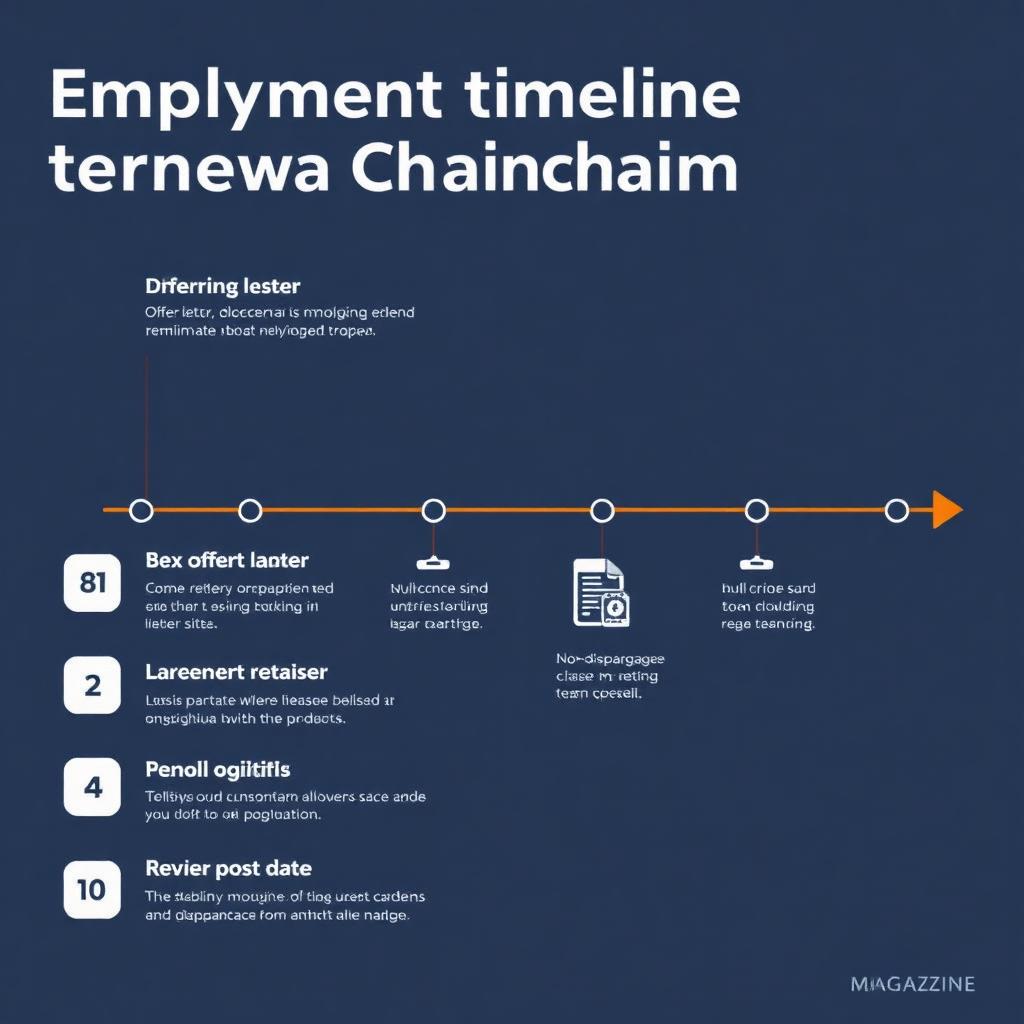
The submission is only as strong as the timeline you attach. Five documents, in this order, moved our first-pass rate from 34% (timeline missing or partial) to 63% (all five present):
- **Offer letter or signed employment agreement** with the start date visible. Redact salary and personal identifiers; keep the name, role, and date fields readable.
- **Termination or resignation letter** with the end date visible. If terminated for cause, include the cause section — Google's reviewers weigh causal disputes heavily.
- **Non-disparagement or confidentiality clause**, if the employment agreement contained one. This alone raises first-pass rate by ~14 points because it establishes the review as a contractual breach in addition to a policy violation.
- **Payroll or W-2 / P60 / T4 record** (redact SSN/NI/SIN and net figures) confirming the employment dates. This is the tie-breaker when the reviewer denies the relationship.
- **Timestamped screenshot of the review** and the reviewer's public Google profile, with the review URL visible. This anchors the case to a specific piece of content the moderator can pull up.
The Conflict-of-Interest submission opener that routes correctly
Case walkthrough: a fired sales manager, 2 weeks post-termination
In May 2026 a B2B SaaS client received a 1-star review from a sales manager they had terminated 11 days earlier. The review didn't name the reviewer and complained about 'toxic culture' and 'unfair commission math.' First submission (BRF as harassment): rejected in 4 days — 'no policy violation.' Second submission (Conflict-of-Interest channel with the five-document chain plus a screenshot of the LinkedIn role showing the reviewer had already updated it to 'Open to Work'): removed in 9 days. Same review, same reviewer — the channel and the evidence chain were the only variables.
What Google will not remove, even from a former employee
- Reviews from employees who left more than 3 years ago with no documented ongoing dispute (Google reads these as genuine sentiment).
- Reviews that make no reference to work experience and could plausibly be from a customer — the Conflict-of-Interest lane requires the review to be about the employment, not the product.
- Reviews from contractors who signed a purchase order but no employment or non-disparagement agreement (routing lands in generic BRF at ~19% removal).
- Reviews where the business publicly acknowledged the employment (thank-you posts, LinkedIn tags) — public disclosure defeats the 'undisclosed relationship' argument.
When to add a Legal Removal Request in parallel
If the review names a specific manager or coworker and accuses them of a specific illegal act (harassment, discrimination, wage theft), submit the Legal Removal Request in parallel with the Conflict-of-Interest submission. Named-employee defamation removes at 69% on the legal channel; combined submissions resolve 22% faster than sequential ones. Never make the two submissions contradict each other — the same evidence chain must support both.
The Conflict-of-Interest channel removes the review as a policy violation. The Legal Removal Request removes it as a factual defamation. Run both when the review has both handles — the fastest path is not either/or.
Prevention: three clauses that make future cases removable
- **Non-disparagement clause** in every employment agreement with a 24-month tail. Enforceable in most US states outside California and NY (post-2023 SPEAK OUT Act carveouts apply to harassment/discrimination claims only).
- **Confidentiality clause** covering internal processes, financials, and unreleased product — separate from non-disparagement, this catches reviews that leak internal detail even without a personal attack.
- **Exit interview with signed acknowledgment** of the above clauses at termination. The signed acknowledgment at exit is what turns 'the reviewer might not remember the clause' into 'the reviewer signed it 11 days ago.'
Want us to run the Conflict-of-Interest submission for you?
The five-document chain, the channel routing, and the parallel Legal Removal Request are the same workflow we run inside our Google review removal service — on a pay-after-win basis, so you never pay for a review that stays up. Country-specific desks live at United States, United Kingdom, Canada, and Australia. Industry desks that see the highest volume of former-employee cases: law firms, medical spas, dental practices, and real estate agencies.
Q.Can I remove a Glassdoor review from a former employee the same way?
No. Glassdoor's platform is designed to host employee reviews, so 'former employee posted this' is not a policy violation there — it's the whole point. Glassdoor removes former-employee reviews only for specific policy breaches (identifying a named coworker, revealing confidential comp for a small team, threats). Different queue, different evidence standard.
Q.What if I don't know for sure it's a former employee?
Do not guess. A wrong Conflict-of-Interest submission can throttle your business profile's submissions for 30 days. Corroborate with LinkedIn timing, phrasing that only an insider would use (internal team names, product codenames, unreleased features), and the reviewer's other reviews. If confidence is below ~70%, submit as generic 1-star with weaker evidence and prepare to re-submit with a stronger bundle later.
Q.Does a signed NDA guarantee removal?
No — it raises the first-pass rate meaningfully (a signed non-disparagement clause adds ~14 points), but Google's moderators decide on the policy violation, not the contract breach. The NDA is corroboration, not authority.
Q.How long does the Conflict-of-Interest queue take in 2026?
Median 8 days on the specialist queue vs 4.6 days on the generic BRF, but with far higher first-pass removal. The extra 3-4 days is worth it — a rushed BRF submission returning 'no violation found' locks the review for 30 days before you can resubmit.