The most common mistake we see businesses make with Google review removal is treating a first-round rejection as final. In our 2025–2026 log, 41% of rejected removals reverse on appeal — but only when the appeal is diagnosed against the specific rejection reason and resubmitted with additional evidence targeted to that reason. Blind resubmission of the same case reverses at 8%. Same rejection, same reviewer, same review — the difference between 41% and 8% is entirely in the diagnosis and the added evidence. This post is the four rejection categories, the evidence-to-add matrix for each, and the resubmission template. This is the appeal workflow we run inside our Google review removal service when a case comes back rejected.
The four rejection categories
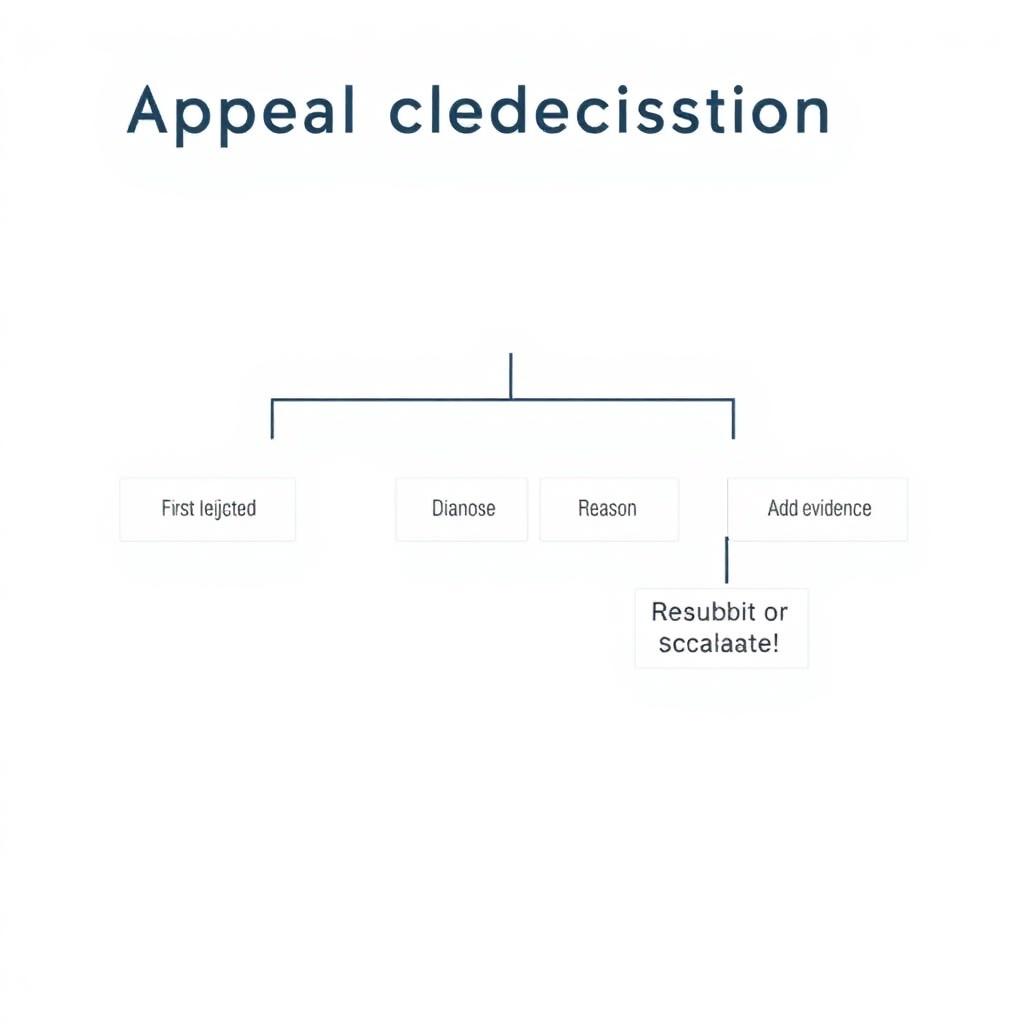
1. 'Does not violate policy' — the vague rejection (52%)
The single most common rejection wording and the most misunderstood. This does NOT mean Google agrees the review is legitimate — it means the reviewer read the submission and could not identify which specific policy was violated. The fix: your original submission was too general. Rewrite quoting the exact policy text (Google's Review Content Policy is publicly documented) and match the violating language in the review to the specific clause. Example: instead of 'this review is fake,' write 'this review violates the Google Reviews Content Policy → Restricted Content → Impersonation clause because the reviewer references a service transaction that never occurred; our booking system records show no customer under this name in the past 24 months (export attached).'
2. 'Insufficient evidence' — the bar-not-met rejection (24%)
Google's reviewer accepted the policy match but concluded the evidence did not clear the burden of proof. The fix: add one more type of evidence than you originally provided, ideally something with a timestamp or an authoritative source. If you originally attached your CRM export, add a notarized affidavit. If you originally attached the affidavit, add a police report or a third-party corroborating record (bank statement, security camera log, insurance claim). Two independent evidence sources almost always clear the bar; three is overwhelming.
3. 'Content is opinion' — the opinion-vs-fact rejection (16%)
Google's reviewers err toward protecting subjective opinion. If your rejection is framed this way, the reviewer decided the challenged content is opinion (not fact). The fix: reframe the case by isolating the specific factual claims within the review (as opposed to the surrounding opinion) and challenging THOSE. A review that says 'terrible service and they overcharged me $500' contains one opinion ('terrible service' — protected) and one factual claim ('overcharged me $500' — challengeable). Your appeal should focus solely on the factual claim with a matching invoice showing the amount charged was correct.
4. 'Unable to verify' — the identity/claim rejection (8%)
Google could not confirm your factual claim from the evidence provided. The fix: switch to primary-source documentation. If you claimed the reviewer was never a customer and provided a CRM screenshot, submit the actual CRM export with a timestamp header showing it was generated on the date of submission (not a screenshot that could be edited). If you claimed the review defames a named employee, submit a notarized affidavit from the employee attesting to the false claim. The goal is to move from 'we say X' to 'here is documented, tamper-evident proof of X.'
The appeal timing rule
Do not appeal within 24 hours of the rejection. Google's queue tracks recent case activity; a same-day resubmission often lands with the same reviewer who just rejected the case — and second-look bias is real. Wait 3-7 days, then resubmit. If the case is time-critical (e.g. an active review-bombing incident — see our Review Bombing 72-Hour Response Playbook), open a fresh submission via a different channel (Business Profile support chat instead of the Business Redressal Form) to guarantee a different reviewer.
The appeal submission template
The evidence-to-add matrix
For each rejection category, add these evidence types you did NOT include the first time:
- Rejected as 'does not violate policy' → add: exact policy citation with URL, quoted violating text from the review, and the specific factual mismatch. Focus on the policy-to-text mapping.
- Rejected as 'insufficient evidence' → add: one more independent evidence source (notarized affidavit if you had CRM, police report if you had affidavit, third-party corroborating record).
- Rejected as 'content is opinion' → add: isolate the specific factual claim within the review, submit only that claim with matching primary-source contradiction (invoice, receipt, appointment log).
- Rejected as 'unable to verify' → add: tamper-evident primary source with generation timestamp (raw CRM export vs screenshot, notarized affidavit vs signed letter, official document vs summary).
First rejections are diagnoses, not verdicts. The reviewer told you exactly what evidence to add — you just have to read the rejection carefully enough to hear it.
Case walkthrough: from 'does not violate policy' to removed
In May 2026 a law firm client submitted for removal a 1-star review claiming 'they missed a court date and lost my case.' Original submission: general 'this is defamatory' framing with a screenshot of the case docket showing no missed appearances. Rejected as 'does not violate policy' in 9 days. Appeal diagnosis: rejection category #1 (vague — reviewer could not identify the specific violation). Appeal resubmission: quoted Google Reviews Content Policy → Restricted Content → False Information → verifiable factual claim clause, quoted the exact phrase 'missed a court date' from the review, attached (a) the full case docket export with timestamps, (b) a notarized affidavit from the attorney of record, (c) an email chain with the client acknowledging attendance at the hearing in question. Removed in 8 days on appeal. Original submission was rejected because it was framed as 'defamation' (too general); appeal was accepted because it was framed as a specific false-factual-claim violation with three-source evidence.
When to stop appealing and escalate
Two rejections on the same case is the escalation point. If your first appeal is also rejected, do not submit a third routine appeal — the case has hit an entrenched decision. Options: (1) escalate to Google Business Profile support chat and reference both prior case IDs, requesting a policy team review; (2) if the review is defamatory and identifiable, escalate to a legal removal request (see Named-Employee Defamation Legal Removal or Legal Removal Request path); (3) if you have exhausted policy channels and the review is not legally actionable, focus on response-and-suppression strategy (see How to Respond to Negative Reviews).
What NOT to do on appeal
- Do NOT resubmit the exact same evidence and expect a different outcome. Google's reviewers can see prior case history; identical resubmissions get auto-rejected.
- Do NOT argue with the rejection wording. Google reviewers are not adversaries — treat the rejection as a diagnostic signal about what evidence was missing, not as a debate to win.
- Do NOT escalate to Twitter / X or public complaints against Google. This has never removed a review and it can bias future reviewers against your account.
- Do NOT submit through multiple channels simultaneously (BRF + Support Chat + Legal). This looks like flooding and can trigger review of your submitter reputation.
Want us to run the appeal for you?
The four-category rejection diagnosis, the evidence-to-add matrix, and the resubmission template are the appeal workflow we run inside our Google review removal service — pay-after-win, so you only pay for reviews that actually come down (including reviews that came down on appeal after a first rejection). Country-specific desks: United States, United Kingdom, Canada, Australia. For high-stakes appeals involving defamation or legal claims, also see our enterprise reputation management for executives.
Q.How long should I wait before appealing a rejected removal?
3-7 days minimum. Same-day appeals often land with the same reviewer who rejected the case. For time-critical situations (active review bombing, media crisis), open a fresh case via a different channel (Business Profile support chat) to guarantee a different reviewer.
Q.Can I appeal more than once?
Yes but with caution. First appeal: 41% reversal in our log. Second appeal after first appeal is also rejected: 12% reversal. Third appeal: under 4%. Two rejections on the same case is the escalation-to-support-chat-or-legal point, not a third routine appeal.
Q.What if I don't understand why the first submission was rejected?
The rejection wording is the diagnosis. 'Does not violate policy' = category 1 (vague submission). 'Insufficient evidence' = category 2 (bar not met). 'Content is protected opinion' = category 3 (fact vs opinion). 'Unable to verify' = category 4 (evidence not authoritative). Match your rejection wording to the four categories and follow the evidence-to-add matrix above.
Q.Does appealing hurt my chances on other pending removals?
No. Cases are evaluated independently. However, submitting many low-quality appeals across many cases in a short window can trigger review of your submitter reputation. Quality of submission matters more than volume — one well-diagnosed appeal beats five blind resubmissions.